
Winter Tips
The New England Guide to Pruning Fruit Trees
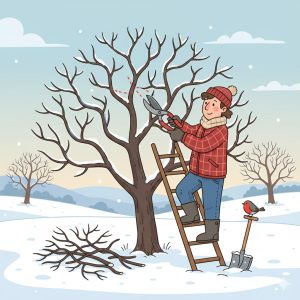 Get Your Orchard Ready for a Beautiful Harvest
In the quiet, woodsy hills of East Haddam, winter is more than just a time for rest—it’s the perfect time to prep your fruit trees for a productive season! Pruning during the dormant season ensures your trees stay healthy, strong, and full of fruit.
🗓️ Timing is Everything
In New England, timing depends on the type of tree. Here is your seasonal roadmap:
Late February – March: The Hardier Fruits
-
Apples & Pears: These are the “tough guys” of the orchard. Prune them while they are fully dormant. This allows you to see the tree’s structure clearly without leaves getting in the way.
Late March – April: The Sensitive Stone Fruits
-
Cherries & Plums: Wait until the deepest freezes have passed. Pruning just as the sap begins to move helps the tree heal its wounds faster.
-
Peaches & Nectarines: Be patient! Wait until the buds look like “pink popcorn.” Peaches are cold-sensitive; pruning too early can lead to winter dieback.
🧼 Clean Tools, Healthy Trees
Think of pruning as surgery for your trees. Using dirty tools is the fastest way to spread “orchard germs” like Fire Blight or Black Rot from one branch to another.
-
Sanitize Between Trees: Carry a spray bottle of 70% isopropyl alcohol or a 10% bleach solution. Give your blades a quick spritz before moving from one tree to the next.
-
Sharpness Matters: Dull blades “crush” the wood rather than cutting it. A clean, sharp bypass pruner creates a smooth wound that the tree can seal over quickly and naturally.
-
Rust Prevention: After a day in the damp New England air, wipe your tools dry and apply a light coat of oil to keep them moving smoothly for the next season.
✂️ The Golden Rule: The Three D’s
No matter the time of year, you should always remove any wood that fits these three categories:
-
Dead: Branches that are brittle and show no green inside.
-
Damaged: Limbs broken by wind, ice, or snow.
-
Diseased: Wood showing signs of cankers or fungus to prevent spreading.
💡 Pro-Tips for a Better Harvest
-
Let the Sun In: Aim for an “open center” shape. A common rule of thumb is that a bird should be able to fly through the middle of your tree without hitting its wings!
-
Avoid the Fall: Never prune in late autumn. This encourages new growth that will be immediately killed by the first frost, which can weaken or kill the entire tree.
At Crabby Bill’s Farm, we believe that caring for the land today leads to the most beautiful blooms and fruits tomorrow.
Happy Pruning!
